At-home LED light therapy masks have become one of the most sought-after skincare devices. When engineered correctly, they offer consistent, non-invasive collagen stimulation and inflammation reduction. However, because the market ranges from medical-grade devices to cheap plastic shells with decorative lights, understanding their physics, technique, and selection criteria is crucial.
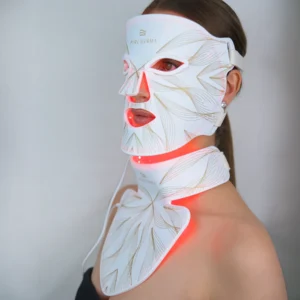
1. Efficiency: Physics & Contact Engineering
The clinical efficiency of an LED mask depends on three interrelated physical principles: Irradiance, Proximity, and Treatment Duration.
┌──────────────────────────────────────────────────────────┐
│              INVERSE SQUARE LAW IN LIGHT THERAPY         │
├──────────────────────────────────────────────────────────┤
│ Light Intensity (Irradiance) drops exponentially as      │
│ distance from the skin increases.                         │
│                                                          │
│  Mask Flush to Skin (0 cm) ───► 100% Target Energy        │
│  Rigid Mask Air Gap (1-2 cm) ──► ~30-50% Energy Loss     │
└──────────────────────────────────────────────────────────┘
The Inverse Square Law: Light intensity decreases rapidly as distance increases. A mask resting flush against your skin delivers significantly more active light energy than a rigid mask sitting 1 to 2 centimeters away.
Optimal Irradiance Target: For home masks, effective power density sits between $30\text{ and }60\text{ mW/cm}^2$ at the skin surface. Higher is not always better—excessive power can cause micro-thermal inflammation or skin hyperpigmentation in sensitive skin types.
Cumulative Energy Dose (Fluence): Total energy delivered is measured in Joules per square centimeter ($\text{J/cm}^2$). A 10-minute session at $40\text{ mW/cm}^2$ delivers a therapeutic dose ($\approx 24\text{ J/cm}^2$) sufficient to activate cellular repair pathways without overheating tissue.
2. Technique & Key Wavelength Mechanisms
LED light therapy (photobiomodulation) uses specific light frequencies to stimulate target chromophores (light-absorbing molecules) inside your skin cells.
| Wavelength | Color | Target Depth | Primary Biological Function |
| 415 nm | Blue | Epidermis (Superficial) | Kills C. acnes bacteria by exciting endogenous porphyrins, creating singlet oxygen that destroys bacteria without antibiotics. |
| 630-633 nm | Red | Mid-Dermis | Absorbed by Cytochrome c Oxidase in cell mitochondria. Boosts ATP (cellular energy), speeding up collagen and elastin synthesis. |
| $830-850 nm | Near-Infrared (NIR) | Deep Dermis & Subdermal | Invisible light that penetrates deep to reduce chronic inflammation, speed tissue repair, and firm sagging matrix structures. |
| $1072 nm (Advanced) | Deep NIR | Deep Subdermal Layer | Found in high-spec units; stimulates heat shock proteins (HSP70) to trigger deeper remodeling. |
Key Takeaway: The gold-standard combination for anti-aging and overall skin health is 633- 830 nm used simultaneously.
3. Recommended Protocol & Frequency of Use
Unlike chemical peels or lasers, LED therapy relies on consistency over intensity.
Frequency: 3 to 5 sessions per week. Daily use is acceptable for low-power masks, but 3–5 days allows optimal cellular recovery cycles.
Session Duration: 10 to 20 minutes per session (follow the manufacturer’s calibrated timer).
Application Technique:
Cleanse First: Wash off all makeup, sunscreen, and heavy oils. Sunscreen (especially mineral zinc oxide/titanium dioxide) blocks light penetration entirely.
Bare Skin vs. Serum: Apply the mask on dry, clean skin or over a lightweight, non-comedogenic Hyaluronic Acid serum. Avoid applying retinoids, AHAs/BHAs, or thick oils before your session to prevent irritation or light refraction.
Eye Protection: Always use built-in silicone eye shields or blackout goggles, especially when using blue light modes.
4. Realistic Results & Timeline
LED light therapy is a cumulative maintenance tool. Expect natural, gradual improvements rather than overnight transformation:
┌──────────────────────────────────────────────────────────┐
│                   EXPECTED TIMELINE                      │
├──────────────────────────────────────────────────────────┤
│ Weeks 1–3  : Reduced inflammation & subtle "glow"        │
│ Weeks 4–8  : Smoother skin texture & reduction in breakouts │
│ Weeks 8–12 : Visible softening of fine lines & firmer feel │
└──────────────────────────────────────────────────────────┘
Weeks 1 to 3: Enhanced micro-circulation leads to immediate post-session radiance and reduced active redness or puffiness.
Weeks 4 to 8: Decreased bacterial acne flare-ups (if using blue/red modes) and smoother overall skin texture.
Weeks 8 to 12+: Measurable improvements in dermal density, fine-line depth (especially crow’s feet and smile lines), and skin elasticity.
5. How to Choose the Right LED Mask (Buying Checklist)
To avoid spending money on a decorative gimmick, look for these key technical specifications:
1. Flexible Medical-Grade Silicone over Rigid Plastic
Flexible silicone masks conform directly to your facial contours, ensuring even distance and maximum light transfer to every area (nose, jawline, cheeks). Hard plastic masks leave large air gaps, reducing energy absorption.
2. Verified Wavelength Precision
Ensure the device explicitly lists exact nanometers:
Red: $630 nm
Near-Infrared: 830-850 nm
Avoid unbranded masks that offer “7 different colors” without specifying nanometer bandwidths.
3. Official FDA 510(k) Clearance
Verify that the device holds FDA 510(k) clearance as a Class II medical device (for over-the-counter wrinkle reduction or acne treatment). Do not accept “FDA Registered” as a substitute.
4. Built-in Eye Protection
Look for medical-grade silicone inserts around the eye cutouts to shield your retina from intense light spillover—particularly important if the mask features 415 nm Blue light.