While both treatments use ultra-fine needles to create controlled micro-injuries in the skin, Radiofrequency (RF) Microneedling adds thermal energy into the mix. Think of traditional microneedling as aerating the lawn to stimulate growth, while RF microneedling aerates and heats the soil underneath to remodel the foundation.
Here is a breakdown of how they work, how they compare, and how to choose the right option for your site’s readers or your clinic clients.
The Core Difference: Mechanical vs. Thermal
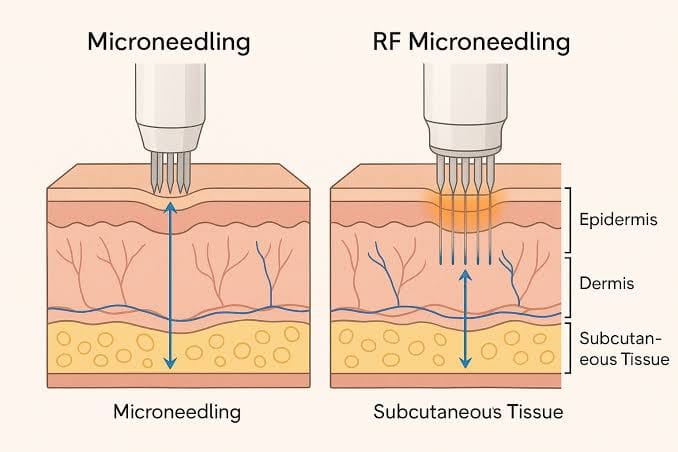
1. Traditional Microneedling (Collagen Induction Therapy)
Uses a motorized pen (e.g., Dermapen, SkinPen) with tiny, sterile needles that puncture the epidermis and upper dermis.
Mechanism: Purely mechanical. The physical micro-injuries trigger the body’s natural wound-healing cascade, inducing fresh collagen and elastin production.
Primary Target: Surface texture, shallow fine lines, minor acne scars, enlarged pores, and hyperpigmentation.
Depth: Typically to .
2. RF Microneedling (Thermal Remodeling)
Combines physical microneedling with insulated or non-insulated needles that emit Radiofrequency heat energy directly into the deeper layers of the dermis (e.g., Morpheus8, Secret RF, Sylfirm X, Potenza).
Mechanism: Mechanical + Thermal. The needles deliver localized heat (usually to ) deep into the dermis without overheating the surface skin (epidermis). This thermal energy causes immediate collagen contraction and stimulates long-term structural tissue tightening.
Primary Target: Skin laxity, sagging jowls, deep acne scars (boxcar/icepick), deep wrinkles, stretch marks, and structural subdermal remodeling.
Depth: Reaches up to depending on the device.
Side-by-Side Comparison
Which One Should You Choose?
 WHAT IS YOUR PRIMARY CONCERN?
                                    │
           ┌────────────────────────┴────────────────────────┐
           ▼                                                 ▼
[Surface Texture & Tone]                          [Laxity, Sagging & Deep Scars]
  • Fine lines                                      • Mild to moderate jowling
  • Enlarged pores                                  • Deep acne scarring
  • Minor surface discoloration                     • Subdermal tightening
           │                                                 │
           ▼                                                 ▼
TRADITIONAL MICRONEEDLING                             RF MICRONEEDLING
Choose Traditional Microneedling If:
You are younger or dealing mainly with early signs of aging, uneven texture, or mild dullness.
You want minimal downtime and a budget-friendly maintenance treatment every few months.
You are looking to enhance the absorption of topical serums (e.g., PRP/PRF, hyaluronic acid, or exosomes).
Choose RF Microneedling If:
You are experiencing mild-to-moderate skin laxity around the jawline, neck, or under-eyes.
You want to treat pitted acne scars that require deep collagen remodeling to lift.
You want a non-surgical option that yields more dramatic contouring and tightening results.